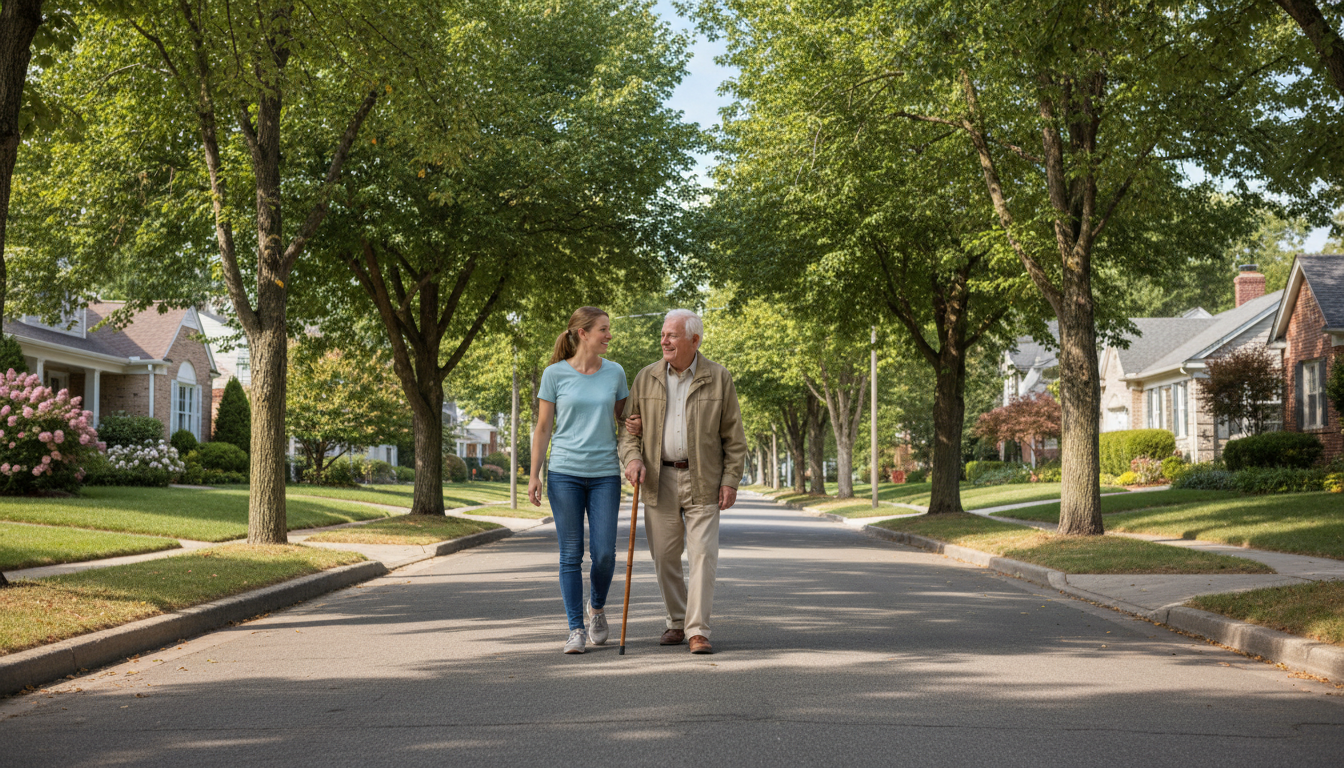
Senior transportation services St. Louis provide essential support for aging parents who can no longer drive safely by offering reliable rides for medical appointments, errands, and social activities. Options ranging from the St. Louis Area Agency on Aging to private home care providers ensure seniors maintain their independence and safety while transitioning away from the driver's seat.
For many families in St. Louis, the car keys represent more than just transportation; they signify a lifetime of independence. Witnessing a parent struggle with navigation on I-64 or return with unexplained dents creates a heavy burden of worry. You want to prioritize their safety, yet you dread the conversation that might feel like stripping away their freedom. Finding a solution that balances safety with dignity is essential for maintaining their quality of life. In this guide, we explore the specific warning signs that indicate it is time to transition. You will learn how to approach this delicate topic with compassion and discover the various senior transportation services available across St. Louis. We also explain why companion-led care offers a level of security and engagement that standard rideshares simply cannot provide for your loved one.
The Emotional Weight of the Car Keys in St. Louis
Handing over the car keys is rarely a simple transaction of hardware; for many St. Louis families, it feels like a heavy admission of defeat. In our region, where the geographic sprawl of Kirkwood, Chesterfield, and South City makes a vehicle nearly essential for daily life, the ability to drive serves as the primary gateway to independence. When a parent begins to realize they can no longer safely navigate the complexities of I-64 or reach the local grocery store, the immediate fear is not just about the loss of a vehicle. It is a profound fear of isolation from the St. Louis community they have spent decades building.
This conversation is one of the most delicate challenges a family will face. It is important to approach these discussions with empathy, recognizing that the ultimate goal is not to strip away freedom. Instead, the focus should be on enhancing quality of life through professional non-medical home care services. By introducing reliable senior transportation services St. Louis residents can depend on, families ensure their loved ones remain active participants in their own lives. Transitioning away from the driver's seat allows seniors to trade the stress of local traffic for a safer way to visit friends, attend appointments, or manage senior meal assistance needs. If you are navigating this difficult milestone, contact CareBuddy today to explore how we support aging in place with dignity.
7 Warning Signs Your Parent Needs Senior Transportation Services in St. Louis

Identifying the right time to transition to senior transportation services St. Louis families can trust requires observing subtle patterns rather than waiting for a major accident. In our region, the need for assistance often reveals itself through small, local failures in navigation or physical control that are amplified by our specific roadway challenges.
Confusion on familiar routes. If a parent gets turned around while heading to the Muny in Forest Park or misses a well-known exit for the Missouri Botanical Garden, it indicates a decline in spatial awareness. These are routes they have likely driven for decades; getting lost suggests cognitive changes that require attention.
Difficulty with high-speed interchanges. St. Louis drivers know that navigating the complex merges of Spaghetti Junction or the heavy commuter flow on I-64 requires split-second decision-making. If your loved one is hesitant, stops in merging lanes, or seems overwhelmed by the pace of Highway 40, their cognitive processing may be slowing down.
Unexplained vehicle damage. Inspect the car for mysterious scrapes on the bumper, dented side mirrors, or paint transfers. These often occur while navigating tight parking lots at a local Schnucks or backing out of a suburban driveway, signaling a loss of depth perception or neck flexibility.
Delayed braking or reaction times. If they are reacting slowly to a light change on Manchester Road or braking abruptly when a car merges ahead of them, their reflexes may no longer meet the demands of heavy St. Louis traffic.
Vision and night driving challenges. Glare from oncoming headlights on poorly lit residential streets can become disorienting. Many seniors will stop attending evening social clubs or religious services to avoid driving in the dark, which is a key indicator that their vision is failing.
Medication side effects. Many prescriptions for blood pressure, sleep, or pain can cause drowsiness or dizziness. In the unpredictable stop and start traffic of I-270, even minor pharmacological impairment is a significant risk.
Increased anxiety behind the wheel. If a parent makes excuses to stay home or appears physically exhausted after a short trip to the grocery store, they are likely aware that their skills are diminishing.
These signs are particularly critical in St. Louis because our infrastructure mixes high-speed interstates with dense, historic neighborhoods. A delayed reaction that might be a minor error in a rural setting can lead to a serious collision on our busy corridors. Recognizing these red flags early allows you to introduce professional non-medical home care services as a supportive measure. If you notice these changes, contact CareBuddy today to discuss how we can maintain your parent's active lifestyle without the risks of the road.
Navigating the Conversation: How to Talk About Safety Without Sacrificing Independence
Initiating a conversation about driving requires a strategy that prioritizes your parent’s dignity over their limitations. Instead of a high pressure intervention, approach the topic as a collaborative transition. Start small by using "I" statements to express your perspective without sounding accusatory. For instance, you might say, "I feel worried when I think about you navigating the construction on Lindbergh Boulevard after dark," or "I am concerned about the heavy traffic during your morning commute to Clayton." This shift in language centers the discussion on your feelings rather than their perceived failures, which helps reduce defensiveness.
A phased approach is often more successful than a sudden, total removal of the car keys. Suggest a "driving retirement" plan where your parent relinquishes the most stressful tasks first. They might continue driving to the local pharmacy or a nearby neighbor's house while utilizing senior transportation services St. Louis for long distance trips, highway driving, or medical appointments. This allows them to test the reliability of outside help while still feeling in control of their immediate surroundings.
If the conversation stalls, involve a neutral third party to provide an objective assessment. A primary care physician in the Central West End or a specialist from professional non-medical home care services can offer a clinical perspective that feels less personal than a child’s critique. Many seniors are more willing to follow a "doctor’s order" regarding road safety than they are to take advice from family members. To learn more about facilitating these difficult transitions with care, contact CareBuddy today to discuss how our specialists can support your family through every step of the process.
Comparing St. Louis Senior Transportation Options

Finding the right solution requires understanding the landscape of St. Louis transit. For many, the first point of contact is Metro Call-A-Ride. This paratransit service provides curb-to-curb transport for those with disabilities or age-related limitations. However, families should be aware of the logistical hurdles; trips often require booking up to two weeks in advance, and the shared-ride nature means a simple trip to the doctor might involve an hour or more of travel time as other passengers are picked up and dropped off.
For residents in specific areas, OATS Transit, in partnership with Aging Ahead, offers a vital link for shopping and medical visits. These services are often neighborhood-specific and operate on a rotating weekly schedule. Similarly, city-led programs like the Chesterfield Older Adult Renaissance (COAR) or the Five Star Center in South City provide hyper-local assistance, though their availability is often restricted to business hours and specific zip codes.
Service Type | Booking Requirement | Support Level |
|---|---|---|
Metro Call-A-Ride | 7 to 14 days advance notice | Curb-to-curb only |
OATS Transit | Pre-scheduled weekly routes | Minimal physical assistance |
GoGoGrandparent | On-demand via phone call | Standard rideshare driver |
Medicaid (NEMT) | 3 days advance notice | Medical appointments only |
Some families explore tech-based solutions like GoGoGrandparent, which allows seniors to access rideshare apps without a smartphone. While this offers speed, it lacks a human-centered approach. A standard driver will not help a passenger through the front door or assist with senior meal assistance bags. For those qualifying for Medicaid (MO HealthNet) in Missouri, Non-Emergency Medical Transportation (NEMT) is available for those with no other means of transport. This is strictly limited to medical appointments and requires verification of eligibility. When these public and tech options fall short of the personalized care required, professional non-medical home care services fill the gap. To find a more reliable, personalized fit for your family, contact CareBuddy today to discuss our senior transportation services St. Louis options.
The CareBuddy Difference: Why Companion Transportation Beats a Standard Rideshare

While public transit and app-based rides provide a way to get from point A to point B, they often fail to address the physical and cognitive hurdles seniors face during the journey. A standard rideshare driver is focused on the GPS and the clock. They offer curb-to-curb service, which means your parent is responsible for navigating the front steps, handling their own bags, and managing the intake process at a medical office alone once the car pulls away.
CareBuddy provides a door-through-door model that redefines the senior transportation services St. Louis families rely on for safety. Our process begins inside the home. A caregiver can assist your parent with getting dressed or gathering their insurance cards and medications before they even step outside. When running errands at the Schnucks on Arsenal, we do not just wait in the parking lot; we help navigate the aisles, assist with heavy lifting, and ensure every bag is carried into the kitchen and put away properly.
For healthcare visits, the value of professional non-medical home care services is most evident in the waiting room. We escort the client inside, help them check in, and can even sit in on the appointment to take notes for the family. This ensures that no detail about a new prescription or follow-up instruction is lost in transition. Once back at home, we make sure they are safely settled and can provide senior meal assistance if they are too fatigued to cook after a long day. We are not just a ride; we are a consistent companion who knows their routine and anticipates their needs. To experience this higher standard of care, contact CareBuddy today to discuss a customized plan for your loved one.
Frequently Asked Questions About Senior Travel in Missouri
Navigating the logistics of aging in Missouri involves understanding specific state regulations and local resources. Below are the most common questions families ask when exploring mobility options.
What public transportation does St. Louis have for seniors? Metro Transit offers MetroBus and MetroLink services with reduced fares for residents aged 65 and older. For those unable to use fixed-route systems, Metro Call-A-Ride provides a paratransit option. While these are cost-effective, they typically only offer curb-to-curb service and require booking up to two weeks in advance, which can be difficult for last-minute medical needs.
Who qualifies for Medicaid transportation? MO HealthNet participants qualify for Non-Emergency Medical Transportation (NEMT) if they have no other accessible way to reach covered medical services. This program is strictly limited to healthcare appointments. It does not cover trips for social engagement, religious services, or grocery shopping.
What is the new test for older drivers in Missouri? Missouri requires drivers aged 70 and older to renew their license every three years rather than the standard six. While there is no automatic road skills test, a vision screening is mandatory at every renewal. The Department of Revenue may also require a physician's statement or a driving evaluation if there are concerns regarding a driver’s physical or mental fitness.
Public resources provide a functional baseline, but they often lack the personalized, hands-on support found in senior transportation services St. Louis families frequently require. If these options do not meet your parent's needs for errands or senior meal assistance, contact CareBuddy today to discuss how our professional non-medical home care services offer a more comprehensive solution.
Transitioning away from driving is a significant emotional milestone, but it does not have to mean a loss of freedom. Finding reliable alternatives ensures your loved one stays connected to their community while staying safe. If you find yourself overwhelmed by the logistics or simply want expert help making this transition smoother, our team is ready to support you. You can explore our Services to see how our companions provide personalized transportation that keeps seniors active. Choosing professional support helps preserve their independence while giving your family peace of mind.